
Grass Roots Education Series
Understanding Limonene
Bright, citrus-forward, and easy to recognize — limonene is one of the most approachable terpene profiles in cannabis. It is the terpene customers often notice when a strain smells like lemon peel, orange zest, fresh citrus oil, or clean fruit-forward brightness.
In this week’s Terpsday breakdown, we’re taking a deeper look at what limonene is, how to identify it, what kinds of strains it commonly appears in, and why citrus-forward terpene profiles matter far more than most customers realize.
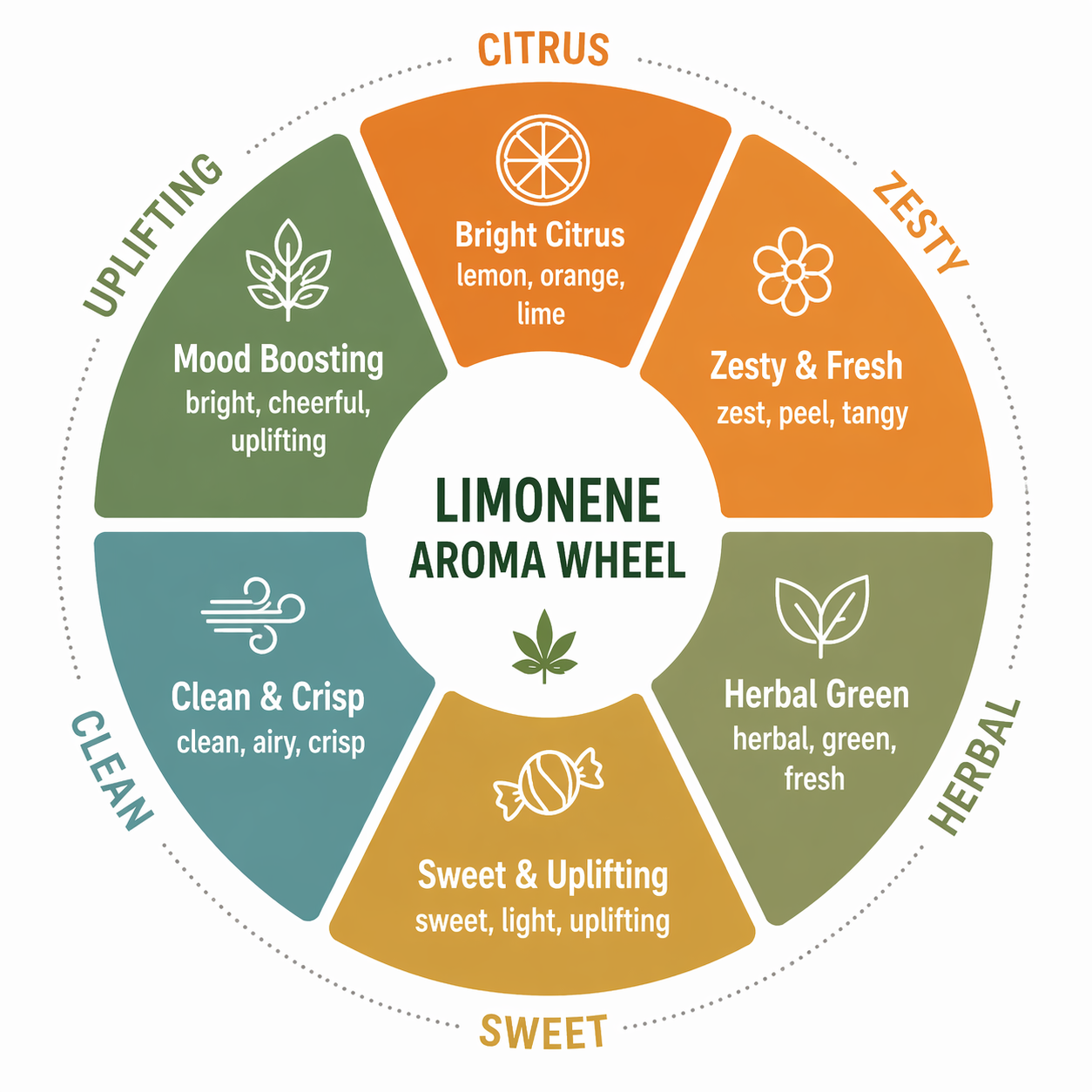
Limonene
What Is Limonene?
Limonene is a naturally occurring terpene found in citrus peels, including lemons, oranges, limes, and grapefruits. It is one of the most recognizable aroma compounds in the plant world because the scent is so familiar: sharp, clean, zesty, and bright.
In cannabis, limonene often shows up in strains with citrus, fruit, candy, tropical, or fresh aroma profiles. It can sit right at the front of the nose, giving a strain an immediate burst of brightness before deeper notes like gas, earth, cream, or spice settle in behind it.
That makes limonene one of the most useful terpenes for customers to recognize early. Once someone learns what citrus-forward cannabis smells like, limonene becomes one of the easiest terpene markers to identify across flower, vapes, concentrates, and infused products.
It is also one of the terpene profiles customers often associate with daytime use, social settings, creative routines, and strains that feel a little more active or mood-forward.
Where Limonene Exists Outside Cannabis
Most people recognize limonene long before they know the name. It is one of the main aromatic compounds responsible for the smell of citrus peels, which is why fresh lemon zest or orange rind can feel so close to certain cannabis profiles.
Limonene is also used widely in cleaning products, fragrances, food flavoring, and essential oils because it smells fresh and recognizable. That familiarity is part of why limonene-heavy cannabis strains feel so approachable to many customers.
When someone smells a cannabis strain and immediately says it smells “clean,” “lemony,” “bright,” or “fresh,” limonene may be playing a major role.
That real-world connection makes limonene one of the easiest terpenes to explain. It gives customers a familiar reference point that helps them build confidence when learning terpene profiles.

How To Identify Limonene
Limonene is usually a top-note terpene, meaning it tends to show up quickly when you smell a product. It does not usually hide in the background. Instead, it gives a strain that immediate citrus pop customers notice right away.
The aroma can vary depending on the surrounding terpene profile. In some strains, limonene smells sharp and lemony. In others, it leans sweeter, like orange candy, tropical fruit, citrus cream, or fruit peel.
When paired with gassy or earthy terpenes, limonene can create a bright-on-top, deep-underneath aroma. That contrast is common in many modern hybrids and exotic cultivars.
Once customers learn to identify limonene, they often start noticing how frequently citrus appears in cannabis menus. It is one of the most common flavor languages used to describe products because the profile is easy to recognize and easy to remember.
- Lemon peel aroma
- Orange zest or citrus oil notes
- Fresh, sharp top notes
- Sweet candy-like citrus in some profiles
- Often paired with pinene, terpinolene, or caryophyllene
- Common in fruit-forward and daytime-friendly cultivars
Why Customers Gravitate Toward Limonene
Customers often gravitate toward limonene because citrus feels familiar, clean, and approachable. A citrus-heavy strain can feel less intimidating than something described as skunky, funky, or deeply gassy.
Limonene-heavy profiles are also commonly associated with a more upbeat experience. While every product depends on the full cannabinoid and terpene profile, many customers connect limonene with strains that feel brighter, more active, or easier to use during the day.
That does not mean every limonene-rich strain is automatically energizing. If limonene is paired with heavier terpenes like myrcene or caryophyllene, the experience may feel more balanced than stimulating. But the citrus note often helps lift the profile and keep it from feeling too heavy.
For dispensary teams, limonene is one of the most useful terpenes to discuss with customers because it connects quickly. Most people understand citrus. That makes it a strong starting point for terpene education.
That accessibility is part of why limonene matters so much in retail cannabis. It gives newer customers a familiar aroma to anchor to while helping experienced customers communicate more specific preferences.
Why Citrus Profiles Matter In Cannabis
Citrus profiles are some of the most powerful aroma cues in cannabis retail because they create an immediate impression. Customers can smell citrus quickly, describe it easily, and remember it later.
That matters when someone is trying to build a personal understanding of what they like. A customer may not remember the full terpene profile from a label, but they will often remember that they enjoyed the “lemony one,” the “orange one,” or the strain that smelled bright and fresh.
Limonene becomes part of that language. It gives customers a practical way to describe what they want without needing to memorize chemistry.
The more customers understand aroma structure, the easier it becomes to move past broad labels and start shopping based on real product personality.
Common Strain Profiles With Limonene
Limonene appears across a wide range of cultivars, especially strains known for citrus, fruit, candy, tropical, or bright hybrid aroma profiles.
It is common in modern exotic genetics, fruit-forward hybrids, and strains marketed around daytime-friendly or mood-forward experiences. But limonene is not limited to one category. It can appear in heavier strains too, where it adds brightness to the top of the profile.
Depending on the surrounding terpenes, limonene can feel very different. With pinene or terpinolene, it may feel sharp, fresh, and active. With caryophyllene, it may feel citrusy but grounded. With myrcene, it may bring brightness to an otherwise heavier profile.
The important point is that limonene should not be treated as a single-effect terpene. It is better understood as a bright aromatic signal that changes based on the rest of the profile around it.
- Citrus-forward hybrids
- Tropical or fruit-heavy cultivars
- Daytime-friendly strains
- Modern exotic profiles
- Bright dessert strains
- Balanced hybrids with a fresh top note
Why Terpene Profiles Matter More Than THC
THC percentage tells customers one thing: potency. It does not tell them whether a product will feel bright, heavy, social, focused, mellow, or body-forward. Terpenes help fill in that missing context.
Limonene is a perfect example. Two products with similar THC numbers can feel completely different if one has a citrus-heavy limonene profile and the other is driven by myrcene, humulene, or caryophyllene.
That is why shopping by terpene profile matters. It helps customers match products to preferences, routines, and desired experiences instead of relying entirely on potency.
Customers who learn to identify limonene may start recognizing why certain strains feel fresher, brighter, or more approachable to them. That pattern recognition is one of the most useful parts of terpene education.
At Grass Roots, that education-first approach is central to how we help customers shop. We want people to understand what they are buying, not just chase the highest number on the shelf.
Limonene In The Modern Cannabis Market
Limonene has become one of the most important terpenes in modern cannabis because customers respond strongly to citrus-forward profiles. Bright, fruit-heavy aroma is easy to understand and tends to photograph, market, and describe well.
That retail appeal matters, but the value goes deeper than branding. Limonene gives dispensary teams a practical way to guide customers toward strains that may feel more upbeat, fresh, or approachable.
As cannabis menus grow more complex, limonene also helps customers identify patterns. Someone who consistently likes citrus-heavy strains may discover they are drawn to limonene-forward terpene profiles across multiple cultivars.
That consistency matters in dispensary environments. Customers may not always remember exact strain names, but they often remember the kind of aroma and experience they enjoyed. Limonene becomes part of that language.
That is how terpene education turns casual shopping into informed preference-building. It gives customers a language for what works.
The Bigger Takeaway
Limonene is one of the most approachable terpene profiles in cannabis. It is bright, recognizable, and deeply connected to the citrus-forward strains many customers already know and enjoy.
For shoppers, limonene offers a practical entry point into terpene education. It helps explain why certain strains feel fresher, brighter, or more daytime-friendly than others, even when THC numbers look similar.
As Terpsday continues, we’ll keep breaking down terpene profiles one at a time to help customers understand cannabis through aroma, flavor, and overall experience — not just THC numbers.
Shop Grass Roots