
Grass Roots Education Series
Understanding Humulene
Earthy, herbal, and quietly structured — humulene is one of the terpenes that gives cannabis a grounded, plant-forward character. It is less flashy than bright citrus or sweet fruit profiles, but it plays an important role in many classic strains.
In this week’s Terpsday breakdown, we’re taking a deeper look at what humulene is, how to identify it, why it often appears alongside caryophyllene, and why earthy terpene profiles still matter in a market full of candy, fruit, and dessert strains.
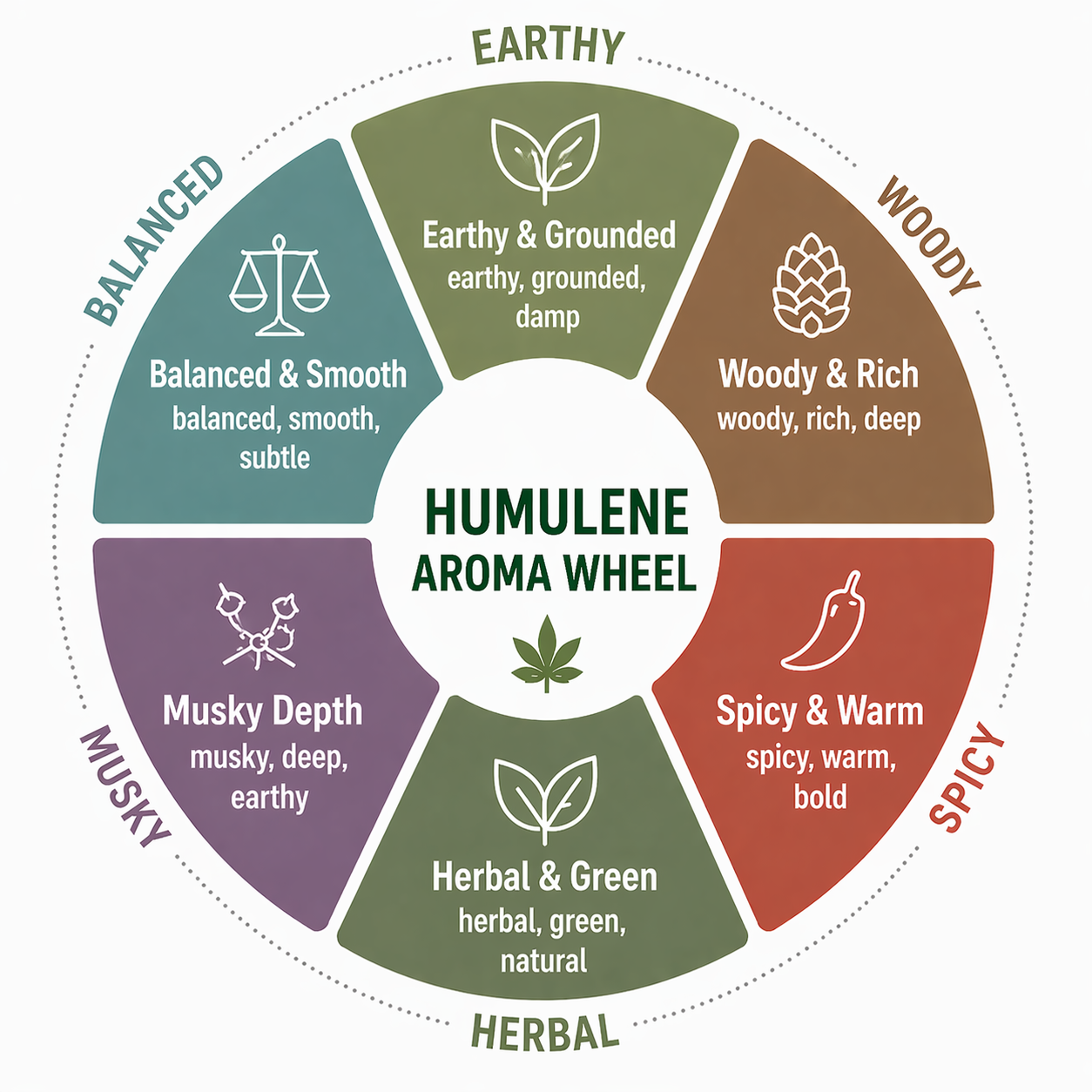
Humulene
What Is Humulene?
Humulene is a naturally occurring terpene found in cannabis, hops, sage, basil, cloves, and other aromatic plants. It is best known for its earthy, woody, herbal character and its close relationship to the aroma of hops.
In cannabis, humulene often appears in strains that feel more traditional, grounded, or plant-forward. It does not usually create the loud sweetness of fruit-heavy strains or the sharp brightness of citrus-dominant profiles. Instead, humulene brings structure.
That structure matters. Humulene can give a strain a dry, herbal backbone that keeps the overall profile from feeling too sugary or overly soft. It adds a kind of old-world cannabis depth that experienced consumers often recognize quickly.
When customers describe a strain as earthy, hoppy, herbal, woody, or slightly bitter in a pleasant way, humulene may be part of what they are noticing.
Where Humulene Exists Outside Cannabis
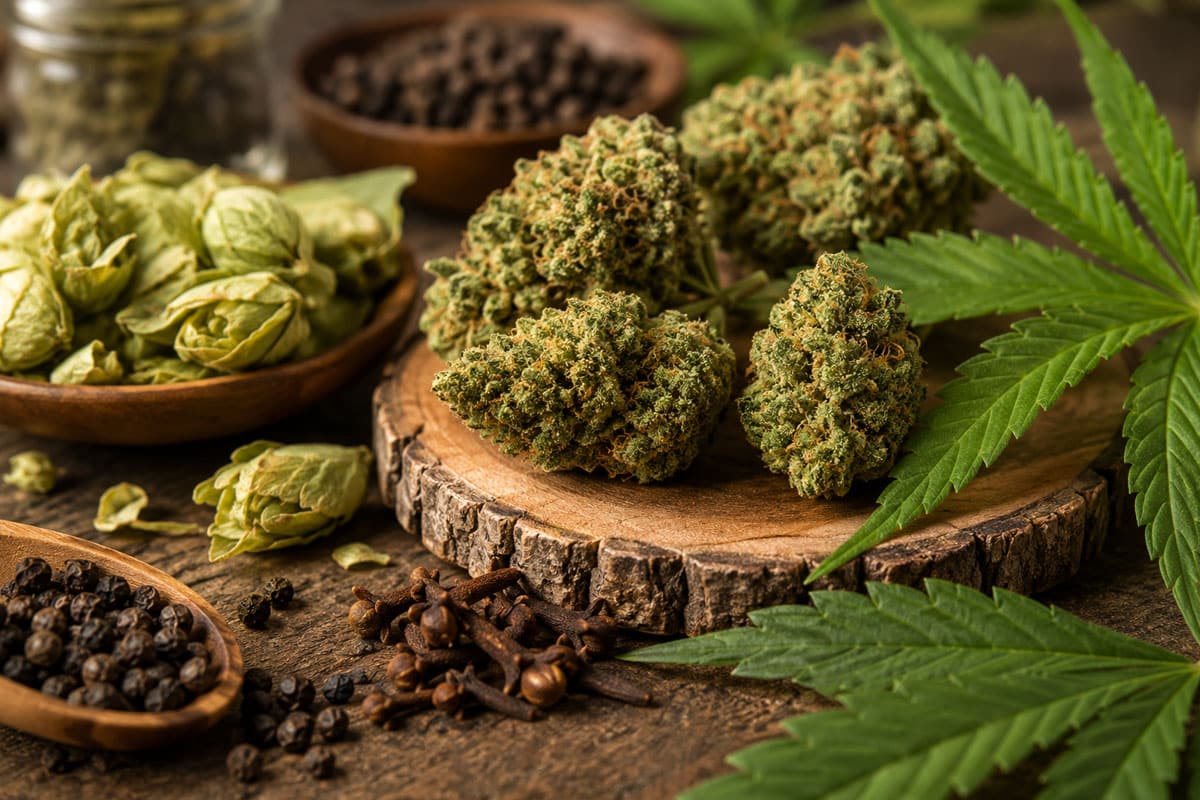
Humulene gets its name from hops, the same plant used to give beer much of its herbal, bitter, and earthy aroma. That connection makes humulene one of the easier terpenes to understand for customers who are familiar with craft beer or herbal profiles.
It is also found in plants like sage, basil, cloves, coriander, and ginseng. Those sources help explain why humulene can smell dry, botanical, spicy, woody, or faintly bitter rather than sweet.
Understanding that connection helps customers recognize that cannabis aroma is part of a broader plant language. Terpenes are not unique to cannabis; cannabis simply expresses them in combinations that create distinct strain personalities.
For humulene, that personality is earthy, herbal, and mature — less candy shop, more spice cabinet and hop field.
How To Identify Humulene
Humulene can be subtle compared to louder terpenes. It rarely jumps out the way limonene or pinene can. Instead, it tends to sit deeper in the profile, adding an earthy or herbal base that supports the rest of the aroma.
The easiest way to recognize humulene is to look for dryness and structure. If a strain smells earthy, woody, hoppy, herbal, or slightly bitter instead of sweet or fruity, humulene may be contributing to that impression.
It is especially noticeable when paired with caryophyllene. Together, those two terpenes can create the peppery, woody, spice-forward character found in many classic cannabis profiles.
Humulene can also help balance sweeter genetics. In a dessert strain, it may keep the profile from becoming too sugary by adding a little earth, wood, or herbal weight underneath the sweetness.
- Earthy, herbal aroma
- Dry woody undertones
- Hoppy or slightly bitter character
- Often paired with caryophyllene
- Common in kush, gas, and classic cannabis profiles
- Less sweet than fruit-forward terpene expressions
Why Customers Gravitate Toward Humulene
Customers who enjoy humulene-heavy strains often appreciate cannabis that feels more grounded, less sugary, and more traditional. Humulene does not usually define a strain through sweetness or flash. It defines it through structure.
That makes it especially appealing to customers who prefer earthy flower, gas-heavy hybrids, herbal profiles, or strains that feel more mature and less candy-forward.
Humulene can also appeal to experienced consumers who miss classic cannabis aromas. As the market has filled with dessert, fruit, and candy genetics, humulene-rich profiles can feel like a return to something more rooted in the plant itself.
For dispensary teams, humulene is useful because it helps explain why some strains feel more restrained, balanced, or old-school even when they share similar THC numbers with sweeter cultivars.
It gives customers a way to talk about cannabis that is not just “strong” or “sweet,” but earthy, structured, herbal, and intentional.
Why Herbal Profiles Matter In Cannabis
Herbal terpene profiles are important because they add complexity. Not every strain needs to smell like fruit, candy, cream, or citrus. Some of the most memorable cannabis profiles are built around earth, wood, spice, herbs, and gas.
Humulene helps create that kind of complexity. It can make a strain feel more dimensional by adding a dry, botanical note underneath louder aromas.
That is especially important in modern menus where many products are described using similar sweet or dessert language. Humulene gives customers another lane to recognize and appreciate.
The more customers understand herbal terpene profiles, the easier it becomes to explain why some strains feel classic, grounded, or balanced before they ever look at THC percentage.
Common Strain Profiles With Humulene
Humulene appears across a range of cultivars, especially strains known for earthy, woody, spicy, herbal, or gas-forward character.
It is often found alongside caryophyllene and myrcene, which can create a deep, grounding terpene profile. That combination is common in strains customers describe as classic, kushy, or more body-forward.
Depending on the surrounding terpenes, humulene can present in different ways. With caryophyllene, it may feel spicy and woody. With myrcene, it may feel deeper and more earthy. With limonene, it may add herbal structure to an otherwise bright profile.
The important point is that humulene is rarely about loudness. It is about balance, dryness, and grounding.
- Earthy hybrids
- Kush-forward cultivars
- Gas-heavy strains
- Woody or herbal flower profiles
- Classic cannabis aroma profiles
- Balanced strains with less sweetness

Why Terpene Profiles Matter More Than THC
THC percentage tells customers about potency, but it does not explain personality. It does not tell customers whether a strain will smell citrusy, earthy, sweet, herbal, floral, or gassy.
Humulene is a perfect example of why terpene profiles matter. A strain with a humulene-heavy profile may feel and smell much more grounded than another product with the same THC percentage but a limonene- or ocimene-forward profile.
That difference matters in real shopping situations. Customers are not just looking for a number. They are looking for a product that fits their routine, taste, preferences, and desired experience.
Once customers understand humulene, they gain another tool for recognizing products that may feel more herbal, structured, and less overly sweet.
At Grass Roots, that kind of terpene education helps move the conversation from “What is strongest?” to “What actually fits you?”
Humulene In The Modern Cannabis Market
Humulene may not always be the loudest terpene on a label, but it remains important because it gives cannabis profiles depth and maturity. In a market where sweet and fruit-forward genetics are everywhere, humulene helps preserve the earthy, herbal side of cannabis.
That matters for customers who prefer traditional flower aromas or want something that feels less candy-driven. Humulene-rich profiles often speak to shoppers who value balance, plant character, and classic strain structure.
From a dispensary perspective, humulene also helps staff explain nuance. Two strains can both be hybrids, both test similarly in THC, and still feel completely different because one leans citrus and the other leans herbal and earthy.
That is where terpene education becomes practical. It gives customers more precise language and helps them build repeatable preferences over time.
As more customers learn to shop by terpene profile, humulene will continue to matter as one of the key markers for grounded, herbal cannabis experiences.
The Bigger Takeaway
Humulene is one of the terpenes that keeps cannabis connected to its earthy, herbal roots. It may not always be the loudest profile in the room, but it adds structure, balance, and depth to many classic strains.
For shoppers, humulene offers a way to understand why certain strains feel more grounded, mature, or plant-forward than others. It helps explain the difference between a product that smells sweet and one that smells herbal, woody, or deeply earthy.
As Terpsday continues, we’ll keep breaking down terpene profiles one at a time to help customers understand cannabis through aroma, flavor, and overall experience — not just THC numbers.
Shop Grass Roots