Cannabis Education
Cannabinoids Explained: THC, CBD, CBG, and CBN in Cape Girardeau
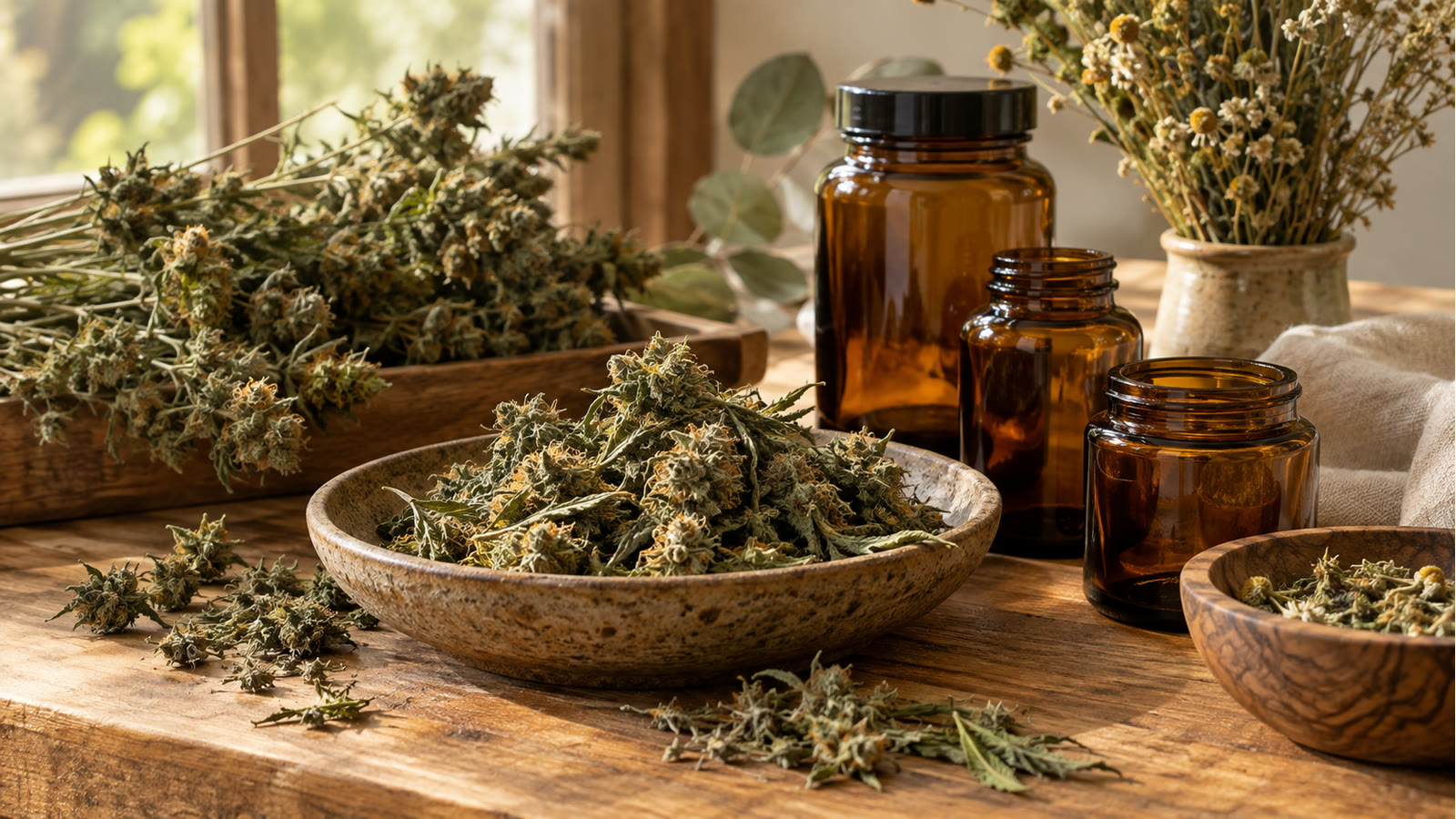
Walk into Grass Roots Dispensary in Cape Girardeau and you will see labels covered in percentages: THC 22%, CBD 1.2%, CBG 0.8%. For many shoppers, those numbers are a guess. This guide explains what each major cannabinoid is, how researchers understand them, and what to look for when reading a certificate of analysis (COA) at a licensed Missouri adult-use dispensary.
All products at Grass Roots are available only to adults 21 and older under Missouri's adult-use cannabis law.
What Are Cannabinoids?
Cannabinoids are naturally occurring compounds produced in the trichomes of the cannabis plant. Researchers have identified more than 100 distinct cannabinoids so far, though only a handful appear in high enough concentrations to show up on a typical COA. The four you will most commonly see at a Missouri dispensary are THC, CBD, CBG, and CBN.
Each cannabinoid has a different molecular structure, which means it interacts differently with the body's endocannabinoid system, a network of receptors found throughout the nervous system, immune tissue, and other organs. That interaction is still an active area of research, and any claims about specific health effects require clinical evidence that is not yet established for most cannabinoids.
THC: The Most Measured Cannabinoid
Delta-9-tetrahydrocannabinol, or THC, is the cannabinoid most cannabis products are measured by. It is the primary psychoactive compound in the plant, and Missouri adult-use dispensaries are required to test and label THC content in all products sold.
A few things worth knowing about THC percentages:
- Flower THC% measures the proportion of THC by dry weight. Percentages in Missouri-licensed flower typically range from around 15% to 30% and above, though THC% alone does not predict the full character of the experience.
- THCA vs. THC: Raw flower contains mostly THCA, which converts to THC through heat. Some COAs list both. The combined figure is sometimes shown as Total THC.
- Concentration in extracts: Concentrates such as live resin and rosin can carry much higher THC percentages than flower, sometimes exceeding 70%.
Because THC% is only one variable, many experienced shoppers pay attention to terpene profiles and overall cannabinoid ratios alongside the headline number.
CBD: The Second-Most-Common Cannabinoid
Cannabidiol, or CBD, is the second cannabinoid you will most often see on a COA. Unlike THC, CBD is not psychoactive in the same way, though the two often occur together in many cannabis strains.
In Missouri dispensary products, CBD levels in adult-use flower are often low relative to THC. Some strains are bred specifically for higher CBD ratios and are stocked at licensed dispensaries for shoppers and medical patients seeking specific cannabinoid profiles. CBD is also present in a range of extract and topical products.
Researchers continue to study how CBD interacts with the endocannabinoid system and what its effects may be at various doses. The FDA has approved one CBD-based pharmaceutical for a specific seizure condition; dispensary products are distinct from pharmaceutical-grade compounds and make no equivalent claim.
CBG: The Precursor Cannabinoid
Cannabigerol, or CBG, is sometimes called the mother cannabinoid because CBGA, its acidic precursor, is the first cannabinoid the plant synthesizes. As the plant matures, enzymes convert CBGA into THCA, CBDA, and other cannabinoid acids, so most mature cannabis strains contain only a small fraction of CBG in the final product.
Breeders have developed strains with higher CBG retention, and these are increasingly available at Missouri dispensaries. On a COA, you might see CBG listed at under 1% in standard strains and considerably higher in CBG-forward cultivars.
Research into CBG is at an early stage. Animal and cell-based studies have examined its interactions with specific receptor types, but clinical evidence in humans is limited. Shoppers interested in higher-CBG flower can ask staff which strains on the current menu show meaningful CBG percentages on their COA.
CBN: A Trace Cannabinoid That Forms With Age
Cannabinol, or CBN, is not produced directly by the plant in the same way THC or CBD is. Instead, CBN forms as THC oxidizes over time. Older or improperly stored cannabis tends to have higher CBN levels because more THC has degraded. Some extract manufacturers also use deliberate oxidation to concentrate CBN into specific products.
CBN products (particularly oils and capsules) are marketed around relaxation and sleep support in some states, though the scientific literature on CBN as a standalone compound for those purposes is still limited. Missouri dispensaries carry some CBN-infused products, and their COAs list CBN content separately.
The flower selection at Grass Roots includes strains whose full COA (covering THC, CBD, CBG, CBN, and terpenes) is available on request. Asking to see it before you buy is a straightforward way to compare profiles across the current menu.
How to Read a Certificate of Analysis
A COA is a third-party lab report showing the cannabinoid and terpene profile of a specific batch. In Missouri, licensed dispensaries are required to carry COA documentation for their products. Here is what to look for in the cannabinoid panel:
- LOQ (Limit of Quantification): Any cannabinoid listed as less than LOQ was detected below the lab's reliable measurement threshold and is effectively trace or absent.
- Total THC vs. Delta-9 THC: Total THC accounts for THCA conversion. For edibles, the relevant figure is usually Total THC.
- Batch date and lab: Check that the COA matches the batch of the product in hand. Missouri-licensed labs are accredited; ask to verify if the lab name is unfamiliar.
- Terpene panel: A complete COA also includes a terpene breakdown. Cannabinoid and terpene profiles together give a more useful picture of a strain than THC% alone.
Frequently Asked Questions
Does a higher THC percentage always produce a stronger experience?
Not necessarily. THC percentage is one variable. Terpene profile, individual tolerance, and overall cannabinoid ratios all contribute to the character of the experience. Two strains at the same THC% can feel quite different, which is why looking at the full COA is more informative than the headline number alone.
Can I buy high-CBD products at a Missouri adult-use dispensary without a medical card?
Yes. Adult-use customers aged 21 and older can purchase any product on the dispensary floor, including strains with higher CBD ratios. Some products are designated medical-only, but many CBD-forward options are available to all adult customers.
Are CBG and CBN products available in Cape Girardeau?
CBG-forward strains and CBN-infused products appear on the menu at Grass Roots periodically, depending on what licensed Missouri cultivators have in production. Our staff can tell you what is currently in stock and pull the COA for any product on the floor.
Do cannabinoid percentages change between batches of the same strain?
Yes. Each grow cycle produces a distinct batch, and cannabinoid percentages can vary even within the same cultivar name. This is one reason COAs are issued per batch. At a licensed Missouri dispensary, you can request the COA for the specific batch you are considering before you buy.
Grass Roots Dispensary is a veteran-owned adult-use and medical cannabis dispensary serving Cape Girardeau and the surrounding region. Adults 21 and older are welcome. Call (573) 803-0380 to check current menu availability or ask our staff about COA documentation for any product in store.